Metallic Epoxy Options, Comparisons, and Cost Factors
How metallic epoxy color and effect options compare to solid color and flake — and what drives the cost of a dimensional showpiece floor.
Metallic Epoxy Flooring
2026-10-15
Metallic epoxy flooring offers a range of options — color, effect, and movement — that change the look and the performance of the finished floor. Understanding these options, and how metallic compares to solid color and flake, is the key to choosing a floor that matches your space and your budget. We install all three systems and can show you samples side by side so the comparison is real.
The cost of a metallic floor is driven by the same factors as any epoxy system — square footage, slab condition, the finish system, and any existing coating removal — plus the metallic-specific variables of pigment selection and effect complexity. We give you a custom estimate after assessing the slab, so the cost reflects what your floor actually needs. Here's how the options compare and what drives the price.
Metallic color and effect options
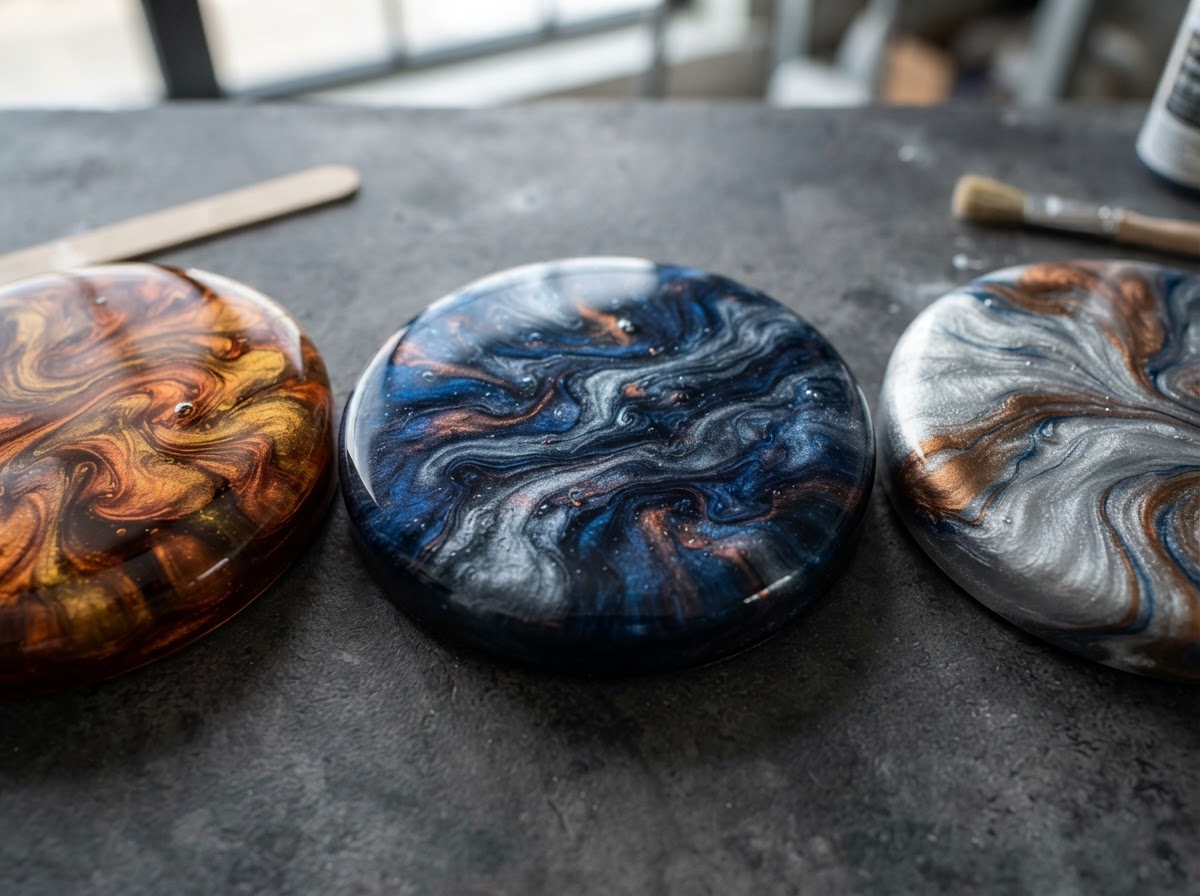
The color sets the base. Silver and charcoal metallics read as polished concrete or pewter — the most architectural, the most neutral, and the most versatile. Bronze and copper read as warm metal — dramatic, rich, and suited to premium spaces. Blues and aquas read as water or stone — the most dimensional, the most varied, and the most showpiece. The color choice sets the statement the floor makes.
The effect sets the movement. More movement creates a dramatic, flowing surface with visible currents and swirls — the full showpiece look. Less movement creates a subtler, more uniform dimensional effect — the architectural look without the drama. The effect is hand-manipulated, so we guide it to match the look you want. Tighter swirls read as more texture; broader flows read as more depth.
The sheen sets the finish. High-gloss is the most reflective and the most dramatic — it amplifies the dimensional effect and reads as polished metal. Satin softens the effect and is more forgiving of wear. For a showpiece floor, high-gloss is the standard; for a more understated dimensional look, satin is the choice. The color and effect are independent of the website's interface colors — your floor is your choice.
Metallic options at a glance
- Silver/charcoal — architectural, neutral, versatile
- Bronze/copper — warm, dramatic, premium
- Blues/aquas — most dimensional, most varied
- More movement — dramatic, flowing, showpiece
- Less movement — subtle, uniform, architectural
- High-gloss — most reflective; satin — softer
Metallic versus solid color and flake
Metallic versus solid color is a comparison of dimension. Solid color is uniform — a continuous color field that reads as flat. Metallic is dimensional — the pigments create the illusion of depth and movement. Solid color is more affordable and more forgiving of slab condition; metallic is the showpiece and requires a smoother slab and more labor. For a modern, architectural look, solid color delivers the uniform field. For a feature floor that's the display, metallic is the statement.
Metallic versus flake is a comparison of texture. Flake is textured — multi-color chips that hide wear and read as a forgiving surface. Metallic is smooth — dimensional pigments that show the slab's condition and read as a showpiece. Flake is the workhorse — practical, affordable, and forgiving. Metallic is the display — dramatic, one-of-a-kind, and demanding. For a daily-use space, flake is practical. For a feature space, metallic is the statement.
All three share the same foundation: a ground, repaired slab with a bonded basecoat and a clear topcoat. The difference is in the finish layer and how each one shows wear. We install all three and can show you samples so you can compare the look and the trade-offs in person — because the right choice depends on how you use the space and what statement you want the floor to make.
Effect complexity and labor
The effect complexity affects the labor. A simple metallic — uniform color with subtle movement — is less labor-intensive. A complex metallic — multiple colors layered, dramatic movement, tight swirls — is more labor-intensive because each layer is hand-manipulated. The more dramatic the effect, the more time it takes to achieve, and the more the floor costs.
For a premium garage or a feature room, the complex effect is worth the labor — the floor is the display, and the dimensional statement is the point. For a more understated space, a simpler effect delivers the metallic look at a lower cost. We help you match the effect complexity to the space and the budget so you pay for the statement you want, not for complexity you don't.
What drives the cost of a metallic floor
Square footage is the base, with economies of scale on larger floors. Slab condition and required repairs are the variable that most often changes the scope — and for metallic, the slab has to be more refined, so the preparation costs more. The metallic pigment selection affects the material: premium pigments cost more. The effect complexity affects the labor: more movement and layering costs more. The topcoat selection — standard, heavy-duty, or UV-stable — also factors in.
Existing coating removal, if the old floor has to come off before the new one goes down, adds time and cost. We assess all of this in person and include it in the estimate so there are no surprises. The estimate is custom because every slab is different — and for metallic, the slab condition is the biggest variable because the finish shows it.
Cost factors for a metallic floor
- Square footage — the base, with economies of scale
- Slab condition — more refined prep for metallic
- Pigment selection — premium metallics cost more
- Effect complexity — more movement and layering costs more
- Topcoat selection — standard, heavy-duty, or UV-stable
- Existing coating removal — if the old floor has to come off
How to choose without overpaying
The right metallic system is the one that matches your use and your space. A feature room may warrant the complex, multi-color effect for the full showpiece statement. A premium garage may warrant a simpler metallic for the dimensional look at a lower cost. We help you match the effect to the real use so you pay for the statement you want, not for complexity you don't.
Share your city or ZIP and we'll confirm availability and schedule the assessment. The estimate is where we identify what your floor needs and what it doesn't — so the cost reflects the actual scope, not a generic number that ignores the slab.
Frequently asked questions
Is metallic epoxy more expensive than solid color or flake?
Yes — metallic typically costs more because it requires a smoother, more refined slab and more labor to manipulate the effect. The pigments are a premium material, and the application is hand-worked. We give you a custom estimate after the assessment so the cost reflects the real scope.
Which metallic color is best for a garage?
Silver and charcoal are the most versatile — they read as polished concrete or pewter and suit most spaces. Bronze and copper are warmer and more dramatic. Blues and aquas are the most dimensional. We help you choose based on the space's lighting and the statement you want.
Can I get a subtle metallic effect?
Yes — we can tune the effect to less movement for a subtler, more uniform dimensional look. The effect is hand-manipulated, so the degree of movement is a choice we make together. A subtle metallic delivers the dimensional look without the full showpiece drama.
How does metallic compare to flake?
Flake is the workhorse — textured, forgiving, and affordable. Metallic is the showpiece — smooth, dimensional, and demanding. For daily-use spaces, flake is practical. For feature spaces where the floor is the display, metallic is the statement.
What affects the price of a metallic floor?
Square footage, slab condition (more refined prep for metallic), pigment selection, effect complexity, topcoat selection, and any existing coating removal. We assess all of these in person and include them in the custom estimate so the cost reflects the actual scope.
Do you serve my area?
We serve South Florida from Palm Beach County to the Florida Keys. Share your project city or ZIP and we'll confirm availability before scheduling your estimate.
Ready to compare metallic options? Request a custom estimate and we'll bring samples to your property.
More about Metallic Epoxy Flooring
What Is Metallic Epoxy Flooring? Suitability and Common Questions
A clear guide to metallic epoxy — what it is, where it works best, and the questions homeowners ask before choosing a dimensional, showpiece floor.
Metallic Epoxy Preparation, Process, and Care
The step-by-step installation process for a metallic epoxy floor — from slab prep through topcoat — plus the care routine that keeps it looking new.
Metallic Epoxy Mistakes, Misconceptions, and How to Avoid Them
The common mistakes that undermine metallic epoxy floors — from wrong slab prep to rushed effect — and how to prevent them before you install.