
KD Epoxy Floor
Concrete Crack & Hole Repair in South Florida
KD Epoxy Floor repairs concrete cracks, holes, and spalls across South Florida as the foundation for any lasting coating. Before any epoxy goes down, defects need proper repair — a coating over an unrepaired crack will telegraph and fail, so we fill and stabilize the concrete first.
We assess crack type and movement, route and clean the crack, and fill it with the right material — epoxy paste for static cracks, polyurea for moving joints. The repair is leveled and profiled so the coating bridges a sound surface. We come to your property to assess the slab and send a custom estimate — share your city or ZIP and we'll confirm availability.
Common applications
- Garages
- Driveways
- Patios
- Commercial slabs
Key benefits
- Restores slab integrity
- Prevents coating failure
- Smooths trip hazards
- Addresses active cracks
What crack and hole repair includes
Concrete repair is the stabilization of defects before coating. Cracks are routed and cleaned to sound material, then filled with a material matched to the crack type. Spalls and holes are patched with compounds suited to the slab and the coating that follows.
The goal is a sound, level surface that the coating can bridge. A coating is only as good as the substrate under it, so repair is not optional — it is the first step of a lasting floor.
Who it is suitable for
Any slab that will be coated — garages, driveways, patios, and commercial slabs. If the concrete has cracks, spalls, or holes, they need to be repaired before coating or the coating will fail at those defects.
We also repair trip hazards and surface defects for slabs that will not be coated, where the goal is a safe, level surface rather than a coating base.
Materials and how to choose
Epoxy paste is a rigid filler for static cracks that will not move. Polyurea joint filler is flexible for moving joints and cracks that need to accommodate movement. Patching compounds handle spalls and holes where the surface needs to be rebuilt.
We match the material to the crack type after assessing movement. The wrong material in the wrong crack is a repair that fails.
Repair materials
- Epoxy paste — rigid fill for static cracks
- Polyurea joint filler — flexible for moving joints
- Patching compounds — rebuild spalls and holes
- Routing and cleaning — to sound material before fill
Preparation and what to expect
We assess crack type and movement, route and clean the crack to sound material, fill it with the right material, and level and profile the surface for coating. The repair is allowed to cure before the coating follows.
Expect the repair to cure before coating — timing depends on the product. A repair rushed to coating is a coating that fails at the repair.
Why repair before coating matters
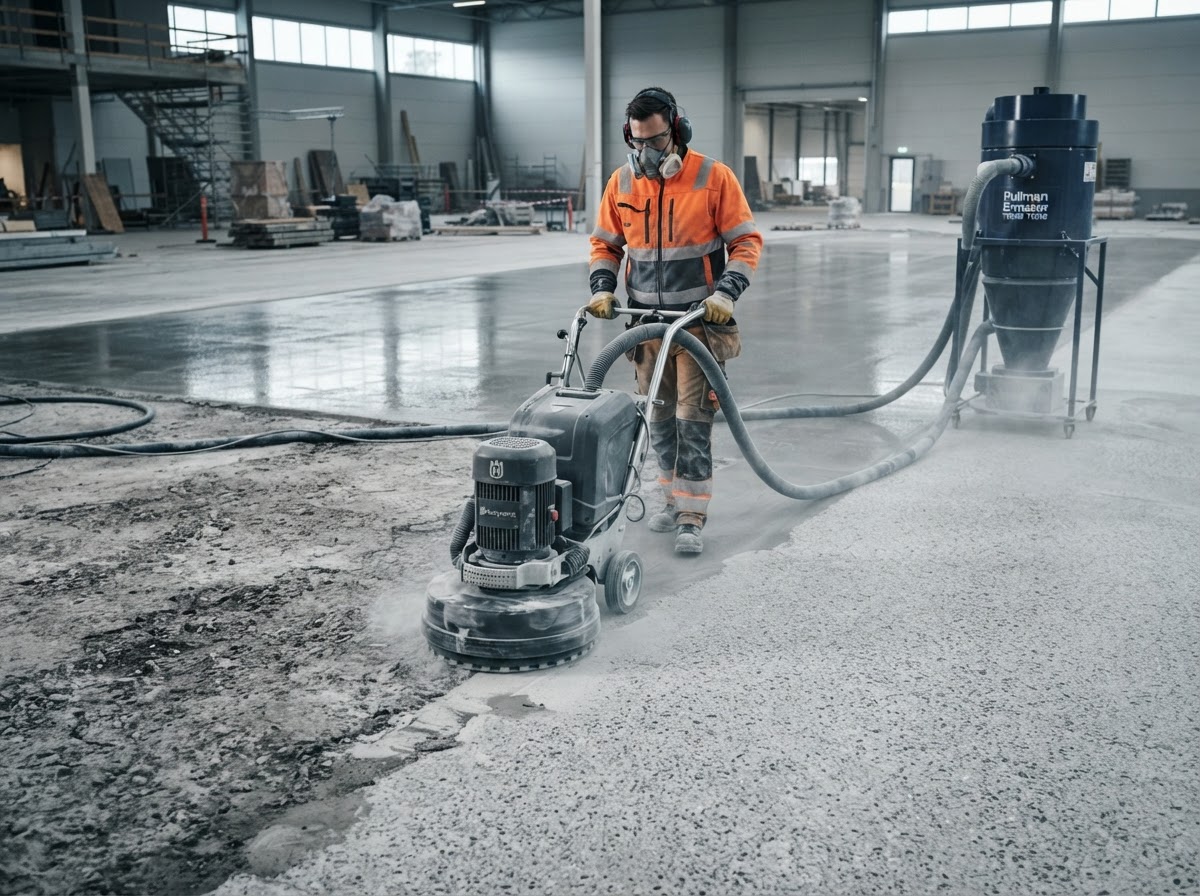
A coating bridges the surface under it. If that surface is cracked, moving, or spalled, the coating telegraphs the defect and eventually fails at it. Repair is what makes a coating last, which is why it is the first step of every floor we install — see our concrete preparation and polishing for the grinding step that follows.
Standalone repair for uncoated slabs
Not every repair is a precursor to a coating. We also repair cracks, holes, and spalls on slabs that will stay bare — driveways with trip hazards, garage slabs with settling cracks, patios with spalled edges — where the goal is a safe, level surface rather than a coating base.
For South Florida slabs that move with the seasons, we assess which cracks are active and fill them with a flexible material so the repair holds instead of reopening. A standalone repair is quoted on its own, with the material and scope matched to the defect and the use the slab gets.
Crack repair for South Florida slabs
South Florida slabs move. Seasonal humidity, sandy soil, and the wet-dry cycle create movement that opens cracks over time, and a rigid fill in an active crack will simply reopen. We assess whether a crack is static or moving before we choose a material, because the right call is what keeps the repair — and the coating above it — intact.
For a driveway or patio that sees standing water and sun, an unrepaired crack also lets water into the slab, which widens the crack and undermines the coating. Repair is how we stop that cycle before the coating goes down, so the floor we install is built on a slab that is actually stable.
Repair as part of a coating project
Crack and hole repair is usually part of a larger coating project rather than a separate decision. We assess the slab, repair the defects, profile the surface, and then coat — in that order — because skipping the repair step is the most common reason a coating fails early. The repair is quoted as part of the estimate, not added later, so you know the full scope before we start.
See our garage epoxy flooring for the finished floor that follows repair, and our diamond preparation and polishing for the profiling step that prepares the repaired slab for coating.
Repair timing and scheduling
A repair has to cure before the coating follows it, which is why timing matters. We schedule the repair, allow the material to reach the cure the product requires, and then coat — not the other way around. Rushing a repair into a coating is how you get a coating that fails at the repair, which costs more in the long run than waiting a day for the fill to set.
For a standalone repair on an uncoated slab, the timing is simpler — the repair cures and the surface is ready for use. Either way, your estimator gives you the schedule for the product and the conditions so you can plan around the work, not around a surprise delay.
How the process works
Clean, chase, and fill cracks to the correct depth.
- 01Assess crack type and movement
- 02Route and clean the crack
- 03Fill with the right material
- 04Level and profile for coating
Cost factors
- Linear feet of crack
- Slab condition
- Material selected
Care & aftercare
- Allow full cure before coating
- Avoid heavy load until set
Frequently asked questions
Properly filled cracks stay sealed, but moving slabs can develop new cracks. We assess movement before repairing so we fill what will hold and flag what will not.
Request concrete crack & hole repair
Tell us about your project and we'll check whether we cover your exact address, walk you through finish options, and send a custom estimate. We come to your property — share your city or ZIP and we'll take it from there.