Solid Color Epoxy Options, Comparisons, and Cost Factors
How solid color epoxy compares to flake and metallic — and what drives the cost of a uniform, seamless floor.
Solid Color Epoxy Flooring
2026-10-15
Solid color epoxy flooring offers a range of options — color, sheen, and system build — that change the look and the performance of the finished floor. Understanding these options, and how solid color compares to flake and metallic, is the key to choosing a floor that matches your space and your budget. We install all three systems and can show you samples side by side so the comparison is real.
The cost of a solid color floor is driven by the same factors as any epoxy system — square footage, slab condition, the finish system, and any existing coating removal — plus the solid-color-specific variables of sheen and color depth. We give you a custom estimate after assessing the slab, so the cost reflects what your floor actually needs. Here's how the options compare and what drives the price.
Color and sheen options compared
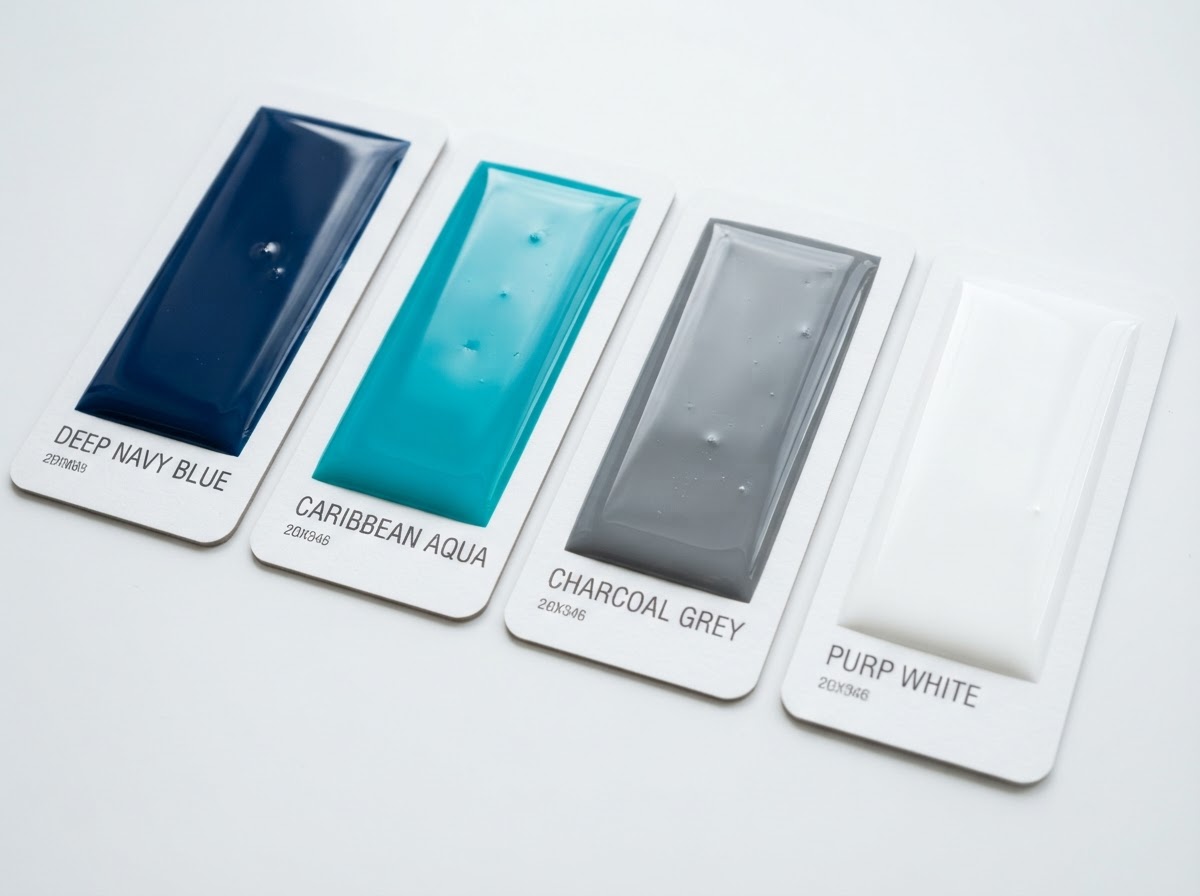
Color is the first choice. Lighter colors — whites, light grays, tans — brighten the space and show less dust but show more dirt and stains. Darker colors — charcoal, navy, black — are dramatic and hide dirt but show more dust and scuffs. Mid-tone grays and tans are the most forgiving neutral, balancing visibility and drama. We help you choose based on the space's lighting and the maintenance you're willing to give it.
Sheen is the second choice. High-gloss is the most reflective — it brightens the space and reads as a showroom — but it also shows every mark and requires the most maintenance to stay looking new. Matte is the most understated — it hides the most and requires the least maintenance — but it reads as less dramatic. Satin splits the difference: enough reflectivity to brighten, enough texture to hide. For most residential applications, satin is the practical choice; for showrooms and display spaces, high-gloss is the statement.
The color and sheen are independent of the website's interface colors. Your floor color is your choice, not our brand palette. On-screen colors are approximate, which is why we bring physical samples and guide the selection in person rather than relying on a screen.
Color and sheen at a glance
- Light colors — brighten, show less dust, show more dirt
- Dark colors — dramatic, hide dirt, show more dust
- High-gloss — most reflective, most maintenance
- Matte — most understated, least maintenance
- Satin — balanced reflectivity and forgiveness
Solid color versus flake and metallic
Solid color versus flake is the most common comparison, and it comes down to forgiveness. A solid color floor shows every scuff, dirt track, and minor slab flaw — it's the cleanest, most uniform look, but it demands a clean space to stay looking good. A flake floor breaks those same marks into a multi-color texture so they disappear. If your space stays clean, solid delivers the crisp look flake can't. If your space gets daily use, flake stays looking newer longer.
Solid color versus metallic is a different comparison. Metallic epoxy is dimensional — flowing, pearlescent, one-of-a-kind — and it requires a smoother, more refined slab and more labor, so it costs more. Solid color is uniform — a continuous color field — and it's more affordable and more forgiving of slab condition. For a modern, architectural look, solid color delivers the uniform field. For a feature floor that's the display, metallic is the statement.
All three share the same foundation: a ground, repaired slab with a bonded basecoat and a clear topcoat. The difference is in the finish layer and how each one shows wear. We install all three and can show you samples so you can compare the look and the trade-offs in person.
System build options
A solid color system can be built as a single-coat, a two-coat, or a multi-coat build. A single-coat system is the most economical but offers less color depth and less wear resistance. A two-coat system is the standard — it builds the color depth and the wear surface for a floor that lasts. A multi-coat system, with additional build coats under the topcoat, is the most durable and is chosen for high-traffic or commercial applications.
The topcoat selection also factors in. A standard topcoat suits most interior spaces. A heavy-duty topcoat, with higher abrasion resistance, suits high-traffic areas. A UV-stable topcoat suits exterior or sun-exposed applications. We match the build and the topcoat to the use so the floor performs in the environment it's installed in.
What drives the cost of a solid color floor
Square footage is the base, with economies of scale on larger floors. Slab condition and required repairs — cracks, spalls, moisture — are the variable that most often changes the scope. The sheen affects the labor: high-gloss requires more preparation and finishing to achieve the reflectivity, so it costs more than matte or satin. The color depth — single-coat versus multi-coat — affects the material. The topcoat selection — standard, heavy-duty, or UV-stable — also factors in.
Existing coating removal, if the old floor has to come off before the new one goes down, adds time and cost. We assess all of this in person and include it in the estimate so there are no surprises. The estimate is custom because every slab is different — a floor with extensive cracks costs more to prepare than a clean slab, and a floor with an existing coating costs more if it has to be removed first.
Cost factors for a solid color floor
- Square footage — the base, with economies of scale
- Slab condition — cracks, spalls, and moisture repairs
- Sheen — high-gloss costs more than matte or satin
- Color depth — single-coat, two-coat, or multi-coat build
- Topcoat selection — standard, heavy-duty, or UV-stable
- Existing coating removal — if the old floor has to come off
How to choose without overpaying
The right solid color system is the one that matches your use and your space. A daily-use garage doesn't need a multi-coat high-gloss build — a two-coat satin system delivers the look and the durability at a lower cost. A showroom or feature space may warrant the high-gloss multi-coat for the statement. We help you match the system to the real use so you pay for what the floor needs, not for what it doesn't.
Share your city or ZIP and we'll confirm availability and schedule the assessment. The estimate is where we identify what your floor needs and what it doesn't — so the cost reflects the actual scope, not a generic number that ignores the slab.
Frequently asked questions
Is solid color epoxy more expensive than flake?
Solid color and flake are typically similar in cost, with high-gloss solid color sometimes more due to the additional finishing labor. The bigger cost drivers are slab condition, sheen, and existing coating removal — not the finish type alone. We give you a custom estimate after the assessment so the cost reflects the real scope.
Which sheen is best for a garage?
For a daily-use garage, satin is the practical choice — enough reflectivity to brighten, enough texture to hide some wear. High-gloss is dramatic but shows every mark and requires more maintenance. Matte is understated but reads as less dramatic. We help you choose based on the use and the maintenance you're willing to give it.
How does solid color compare to metallic?
Solid color is uniform — a continuous color field — and more affordable and forgiving of slab condition. Metallic is dimensional — flowing, one-of-a-kind — and higher cost because it requires a smoother slab and more labor. For a modern, architectural look, solid color. For a feature floor that's the display, metallic.
What affects the price of a solid color floor?
Square footage, slab condition and repairs, sheen, color depth (single-coat versus multi-coat), topcoat selection, and any existing coating removal. We assess all of these in person and include them in the custom estimate so the cost reflects the actual scope.
Can I choose any color?
Yes. We work from a range of standard colors and can match custom colors. Physical samples guide the final selection because on-screen colors are approximate. The color is your choice — independent of the website's interface colors.
Do you serve my area?
We serve South Florida from Palm Beach County to the Florida Keys. Share your project city or ZIP and we'll confirm availability before scheduling your estimate.
Ready to compare solid color options? Request a custom estimate and we'll bring samples to your property.
More about Solid Color Epoxy Flooring
What Is Solid Color Epoxy Flooring? Suitability and Common Questions
A clear guide to solid color epoxy — what it is, where it works best, and the questions homeowners ask before choosing a clean, uniform floor.
Solid Color Epoxy Preparation, Process, and Care
The step-by-step installation process for a solid color epoxy floor — from slab prep through topcoat — plus the care routine that keeps it looking new.
Solid Color Epoxy Mistakes, Misconceptions, and How to Avoid Them
The common mistakes that undermine solid color epoxy floors — from wrong sheen to poor prep — and how to prevent them before you install.