Commercial Flooring Options, Comparisons, and Cost Factors
How epoxy, polyurethane, and polyaspartic commercial systems compare — and what drives the cost of a heavy-duty working floor.
Commercial & Warehouse Flooring
2026-10-15
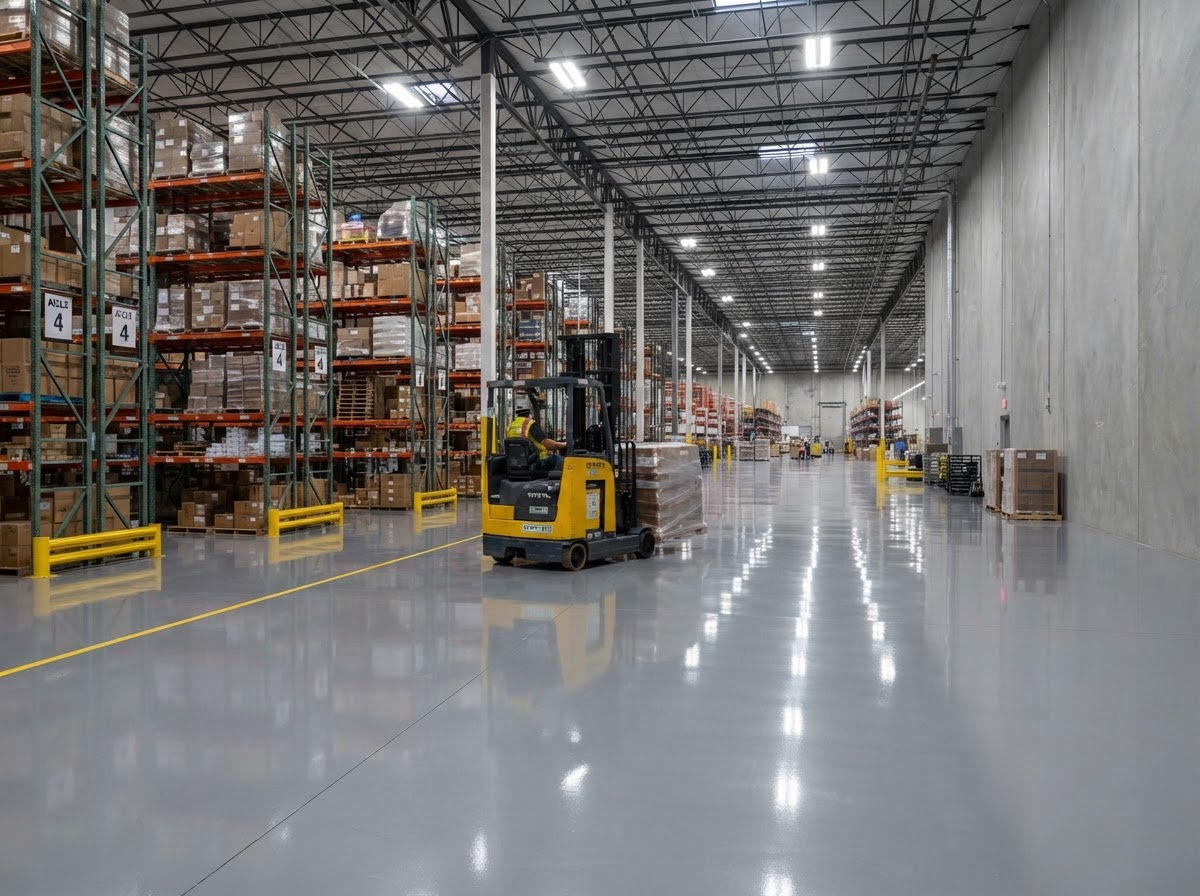
Commercial flooring offers a range of systems — epoxy, polyurethane, polyaspartic, and hybrid builds — each with different performance profiles for different traffic, chemical, and downtime demands. Understanding these options, and how they compare, is the key to specifying a floor that holds up without overpaying for performance you don't need. We install all the major commercial systems and can match the system to your actual use.
The cost of a commercial floor is driven by the same factors as any epoxy system — square footage, slab condition, the finish system, and any existing coating removal — plus the commercial-specific variables of build thickness, topcoat specification, and line striping. We give you a custom estimate after assessing the facility, so the cost reflects what your floor actually needs. Here's how the options compare and what drives the price.
Epoxy, polyurethane, and polyaspartic compared
Epoxy is the workhorse of commercial flooring. A heavy-duty epoxy build — primer, build coats, topcoat — delivers the thickness and abrasion resistance most warehouse and manufacturing floors need. Epoxy bonds well, builds thick, and handles forklift traffic and pallet drag when specified for the load. It's the most cost-effective commercial system for most applications, and it's the one we install most often.
Polyurethane topcoots offer higher chemical and UV resistance than epoxy topcoats. For a floor that sees aggressive chemicals, thermal cycling, or sun exposure — an auto shop, a manufacturing floor with chemical processes, or a warehouse with skylights — a polyurethane topcoat over an epoxy build delivers the chemical resistance the exposure demands. It costs more than an epoxy topcoat, but it holds up to exposures that would break one down.
Polyaspartic is the fast-cure option. A polyaspartic system can accept traffic in hours, not days — which matters when downtime is critical. It also offers good UV stability and a clear, bright finish. The trade-off is cost and the fast cure itself: the working time is short, so the installation has to be fast and precise. For a facility that can't be down for long, polyaspartic is the system that gets you back in service fastest.
Commercial systems at a glance
- Epoxy — workhorse, thick build, cost-effective
- Polyurethane topcoat — higher chemical and UV resistance
- Polyaspartic — fast cure, back in service in hours
- Hybrid builds — epoxy base with polyurethane or polyaspartic topcoat
Build thickness and traffic rating
The build thickness determines the abrasion resistance. A light-traffic commercial floor — retail back-of-house, office corridors — needs less build than a heavy-traffic warehouse. A heavy-traffic floor — forklifts, pallet jacks, constant heavy loads — needs a thicker, denser build to hold up. We specify the build by the traffic the floor will actually see, not by a generic commercial spec.
An under-specified floor fails. A residential-thickness epoxy in a warehouse will wear through in months, costing the business a recoat or a redo far sooner than a properly specified system would have. An over-specified floor costs more than the traffic demands. We assess the actual traffic and match the build so the floor holds up without overbuilding.
Topcoat specification and chemical resistance
The topcoat is the wear surface and the chemical barrier. A standard epoxy topcoat suits dry warehouse traffic. A polyurethane topcoat suits chemical exposure and UV. A polyaspartic topcoat suits fast-cure and UV applications. The topcoat is specified by the chemicals the floor will see — oil, solvents, acids, cleaning chemicals — and the thermal and UV exposure.
For a commercial kitchen or a food-processing floor, the topcoat may need to integrate with a sanitary cove base for cleanability. See our sanitary cove base installation for the cove base scope. The topcoat is where the floor's performance lives, and it's where under-specification shows up first — a floor that fails at the surface while the build underneath is still sound.
What drives the cost of a commercial floor
Square footage is the base, with economies of scale on larger floors. Slab condition and required repairs — cracks, spalls, joint repair — are the variable that most often changes the scope. The build thickness affects the material: a heavy-traffic build costs more than a light-traffic build. The topcoat specification affects the material and the labor: polyurethane and polyaspartic cost more than epoxy. Line striping, if included, adds to the scope. Existing coating removal, if the old floor has to come off, adds time and cost.
We assess all of this in person and include it in the estimate so there are no surprises. The estimate is custom because every facility is different — a warehouse with a clean slab costs less to prepare than one with extensive joint damage, and a floor with an existing coating costs more if it has to be removed first.
Cost factors for a commercial floor
- Square footage — the base, with economies of scale
- Slab condition — cracks, spalls, joint repair
- Build thickness — light, medium, or heavy traffic
- Topcoat specification — epoxy, polyurethane, or polyaspartic
- Line striping — walkways, lanes, hazard zones
- Existing coating removal — if the old floor has to come off
How to choose without overpaying
The right commercial system is the one that matches your traffic and exposure without overbuilding. A dry warehouse doesn't need a polyurethane topcoat — a heavy-duty epoxy build delivers the performance at a lower cost. An auto shop does need the chemical resistance — an epoxy topcoat would break down. We help you match the system to the real use so you pay for the performance you need, not for what you don't.
Share your city or ZIP and we'll confirm availability and schedule the facility assessment. The estimate is where we identify what your floor needs and what it doesn't — so the cost reflects the actual scope, not a generic number that ignores the traffic.
Frequently asked questions
Which commercial system is best for a warehouse?
For most warehouses, a heavy-duty epoxy build with an epoxy or polyurethane topcoat delivers the abrasion resistance and the cost-effectiveness the traffic demands. For chemical exposure or fast-cure needs, polyurethane or polyaspartic may be specified. We match the system to the actual traffic after the assessment.
Is polyaspartic worth the extra cost?
It is when downtime is critical — polyaspartic accepts traffic in hours, not days, so a facility that can't be down for long benefits from the fast cure. It also offers good UV stability. For a facility with downtime tolerance, a heavy-duty epoxy build delivers the performance at a lower cost. We help you weigh the trade-off.
How thick does a commercial floor need to be?
The build thickness is specified by the traffic. A light-traffic floor needs less build; a heavy-traffic floor with forklifts needs a thicker, denser build. An under-specified floor fails; an over-specified floor costs more than it needs to. We assess the actual traffic and match the build so the floor holds up without overbuilding.
What affects the price of a commercial floor?
Square footage, slab condition, build thickness, topcoat specification, line striping, and any existing coating removal. We assess all of these in person and include them in the custom estimate so the cost reflects the actual scope.
Can you handle chemical exposure?
Yes — we specify the topcoat by the chemicals your floor will see. A polyurethane or polyaspartic topcoat holds up to oil, solvents, acids, and cleaning chemicals that would break down a standard epoxy topcoat. We assess the exposure and match the topcoat to it.
Do you serve my area?
We serve South Florida from Palm Beach County to the Florida Keys. Share your project city or ZIP and we'll confirm availability before scheduling your estimate.
Ready to specify a commercial floor? Request a custom estimate and we'll assess your facility.
More about Commercial & Warehouse Flooring
What Is Commercial & Warehouse Flooring? Suitability and Common Questions
A clear guide to heavy-duty commercial and warehouse epoxy flooring — what it is, where it's required, and the questions facility managers ask before coating a working floor.
Commercial Flooring Preparation, Process, and Care
The step-by-step installation process for a commercial epoxy floor — from slab prep through topcoat — plus the maintenance that keeps it in service.
Commercial Flooring Mistakes, Misconceptions, and How to Avoid Them
The common mistakes that undermine commercial and warehouse floors — from under-specification to poor joint prep — and how to prevent them.