
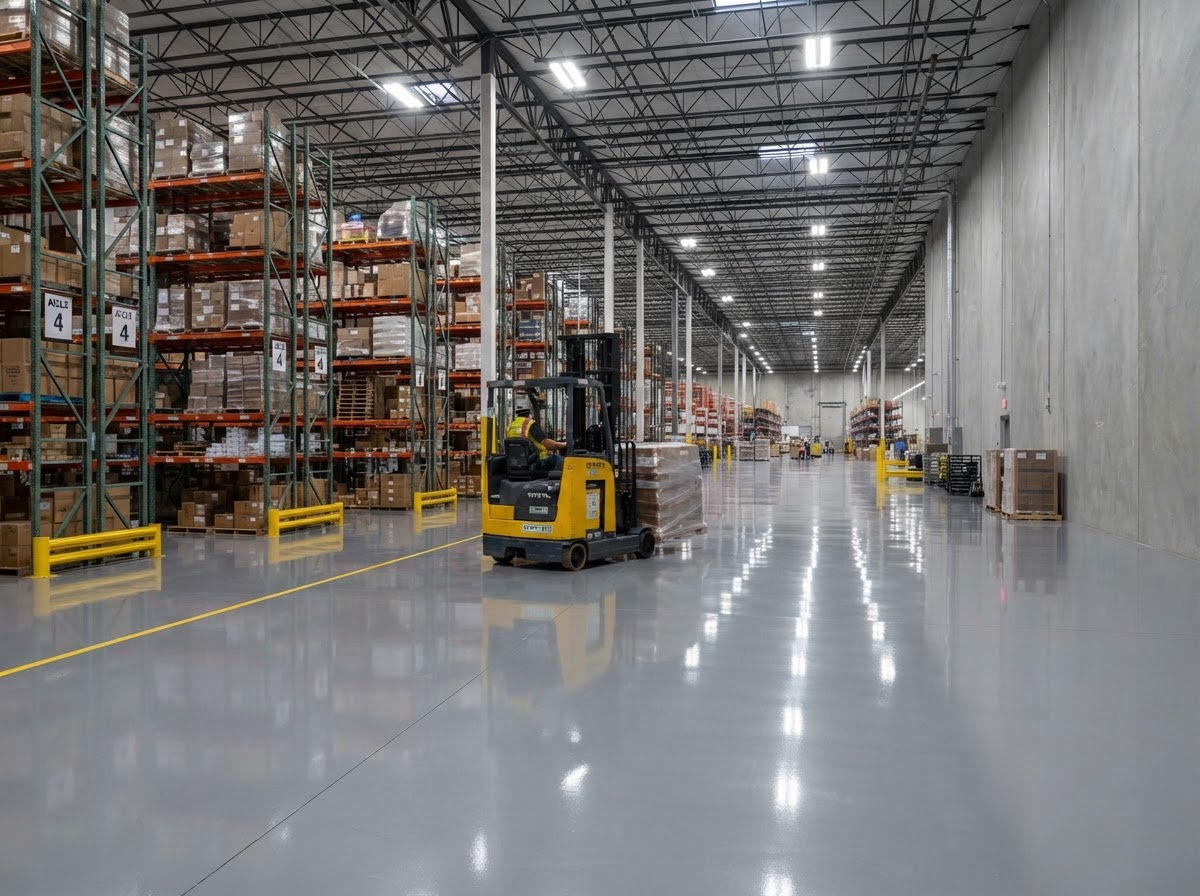
Commercial Flooring Mistakes, Misconceptions, and How to Avoid Them
The common mistakes that undermine commercial and warehouse floors — from under-specification to poor joint prep — and how to prevent them.
Commercial & Warehouse Flooring
2026-10-15
Commercial and warehouse flooring is engineered for performance — and the mistakes that undermine it are almost always specification or preparation failures. An under-specified floor fails under traffic it wasn't built for. A floor with poor joint prep fails at the joints. A floor coated over moisture or a failing existing coating fails at the bond. Understanding these mistakes is the best way to specify a commercial floor that holds up for years instead of failing in months.
KD Epoxy Floor installs commercial and warehouse flooring across South Florida, from Palm Beach County to the Florida Keys. We've built our process to prevent every one of these failures. Here are the mistakes we see most often, the misconceptions behind them, and how to make sure your commercial floor doesn't fall victim to them.
Mistake 1: Under-specifying the build for the traffic
A residential-thickness epoxy in a warehouse will wear through under forklift traffic in months. A light-traffic build in a heavy-traffic space fails at the wear surface because the coating isn't thick or dense enough to take the abuse. The mistake is specifying the floor by cost rather than by traffic — because a commercial floor that's under-specified costs the business a recoat or a redo far sooner than a properly specified system would have.
The fix is matching the build to the traffic. We assess the actual loads — forklifts, pallet jacks, foot traffic, chemical exposure — and specify a build that holds up to them. A heavy-traffic floor needs a thicker, denser build; a light-traffic floor needs less. We help you specify the floor by the use, not by the price — because the cheapest floor is the one that doesn't need to be redone.
Mistake 2: Poor joint preparation
Joints are the biggest variable in a commercial floor. A joint that's left open collects debris and breaks the coating at the edge. A joint that's filled with the wrong filler crumbles under traffic and fails the coating above it. A joint that needs to move — an expansion joint — that's filled rigidly cracks the coating when the slab moves. The mistake is treating joints as an afterthought rather than as the part of the floor that fails first.
The fix is assessing every joint during preparation. We clean, repair, or seal joints as the traffic and the movement demand. A joint that needs to move gets a flexible filler; a joint that needs to be filled gets a traffic-rated filler. The joint prep is what makes the coating hold up at the edges — because a coating that fails at a joint fails the whole floor.
Mistake 3: Under-specifying the topcoat for the exposure
A standard epoxy topcoat in an auto shop will break down under oil and solvent exposure. A non-UV-stable topcoat in a warehouse with skylights will yellow and chalk. The mistake is specifying the topcoat by cost rather than by the chemicals and the UV the floor will actually see — because the topcoat is the wear surface, and under-specification shows up first at the surface.
The fix is matching the topcoat to the exposure. We assess the chemicals, the thermal cycling, and the UV the floor will see and specify a topcoat that holds up to them. A polyurethane or polyaspartic topcoat costs more than an epoxy topcoat, but it holds up to exposures that would break one down. The right topcoat is what makes the floor perform in the environment it's installed in.
Common commercial flooring mistakes
- Under-specifying the build → match thickness to traffic
- Poor joint prep → assess and repair every joint
- Under-specifying the topcoat → match to chemical and UV exposure
- Coating over moisture → test and address first
- Coating over a failing floor → test adhesion, remove if failing
- Ignoring downtime → plan the installation around operations
Mistake 4: Coating over moisture or a failing slab
A commercial floor applied over a moist slab can blister and delaminate as moisture vapor pushes through the surface. A commercial floor applied over a failing existing coating lifts with the old coating underneath it. The misconception is that a heavy-duty build is thick enough to bridge these problems. It isn't — no coating system bonds to a compromised substrate, and in a commercial floor, the failure costs the business downtime.
We test for moisture and test existing coating adhesion before any commercial coating goes down. If the slab has high moisture, we address it first. If the existing coating is failing, we remove it first. See our existing coating removal for the removal scope. The commercial system is only as durable as the slab it bonds to.
Mistake 5: Ignoring the downtime
A commercial floor that takes the facility out of service for longer than the business can tolerate costs more than the installation — it costs the lost operations. The mistake is specifying the system without considering the cure window — because an epoxy topcoat that takes days to cure may be the wrong choice for a facility that can't be down, where a polyaspartic system would have been back in service in hours.
The fix is planning the installation around the operations. We assess the downtime tolerance and match the product to it — nights, weekends, phased sections, or a fast-cure system. The right system is the one that holds up to the traffic and gets the facility back in service as fast as the operations demand.
Mistake 6: Neglecting maintenance
A commercial floor that's not maintained fails at the topcoat — the debris traffic brings abrades the surface, the spills that aren't cleaned break down the coating, and the wear that isn't recoated becomes a failure. The misconception is that a commercial floor is maintenance-free. It isn't — it's low-maintenance, but the maintenance it needs keeps it in service for years instead of failing at the surface.
The fix is a maintenance schedule based on the traffic. Regular sweeping or scrubbing, prompt spill cleanup, and recoats in high-traffic areas keep the floor sound. See our coated floor renovation and maintenance for the maintenance scope. A maintained commercial floor stays in service; a neglected one costs the business a redo.
How to make sure your commercial floor doesn't fail
Every mistake above is preventable with the right specification and process. We assess the traffic, the chemicals, and the joints; we specify the build and the topcoat for the exposure; we test for moisture and existing coating adhesion; we plan the installation around the operations; and we set a maintenance schedule. The estimate is where we identify what your floor needs, and the installation is where we deliver it.
Share your city or ZIP and we'll confirm availability before scheduling the facility assessment. We serve South Florida from Palm Beach County to the Florida Keys, and we'll tell you honestly whether your area is within our working scope before we book the estimate.
Frequently asked questions
Why do commercial floors fail?
Almost always because of specification or preparation failure — the build was under-specified for the traffic, the joints weren't prepped, the topcoat was under-specified for the chemicals, moisture wasn't tested, or a failing existing coating was coated over. The commercial system is only as durable as the slab and the specification it's built on.
Can I use a residential epoxy in a warehouse?
No — a residential-thickness epoxy will wear through under forklift traffic in months. A commercial floor is engineered for the traffic, with a thicker, denser build and a topcoat specified for the chemicals. The cost difference is the cost of a floor that holds up instead of one that fails.
What's the biggest mistake with commercial flooring?
Under-specifying the build for the traffic. A floor specified by cost rather than by the actual loads fails under the traffic it wasn't built for. We assess the traffic and specify the build so the floor holds up — because the cheapest floor is the one that doesn't need to be redone.
How do I keep a commercial floor in service?
Sweep or scrub regularly, clean spills promptly, and recoat high-traffic areas when wear appears. A maintenance schedule based on the traffic keeps the floor sound for years. See our coated floor renovation and maintenance for the full maintenance scope.
Can you work around our operations?
Yes — we plan the installation around your schedule: nights, weekends, or phased sections. For a facility that can't be down, a polyaspartic system with a fast cure may be the right choice. We match the product and the schedule to your downtime tolerance.
Do you serve my area?
We serve South Florida from Palm Beach County to the Florida Keys. Share your project city or ZIP and we'll confirm availability before scheduling your estimate.
Want a commercial floor that holds up? Request a custom estimate and we'll specify it right.
More about Commercial & Warehouse Flooring
What Is Commercial & Warehouse Flooring? Suitability and Common Questions
A clear guide to heavy-duty commercial and warehouse epoxy flooring — what it is, where it's required, and the questions facility managers ask before coating a working floor.
Commercial Flooring Options, Comparisons, and Cost Factors
How epoxy, polyurethane, and polyaspartic commercial systems compare — and what drives the cost of a heavy-duty working floor.
Commercial Flooring Preparation, Process, and Care
The step-by-step installation process for a commercial epoxy floor — from slab prep through topcoat — plus the maintenance that keeps it in service.