
What Is Garage Epoxy Flooring? Suitability and Common Questions
A plain-language guide to what garage epoxy flooring actually is, who it's for, and the questions South Florida homeowners ask before coating their garage slab.
Garage Epoxy Flooring
2026-10-15
Garage epoxy flooring is a layered coating system bonded to a prepared concrete slab — not a single can of paint rolled over bare concrete. A pigmented basecoat delivers the color, a finish layer sets the look, and a clear topcoat seals everything against the daily abuse a garage floor takes: hot tires, oil drips, dropped tools, and tracked-in sand. When the slab is properly prepared and the right product is matched to the use, the result is a seamless, reflective surface that brightens the garage and wipes clean for years.
KD Epoxy Floor installs garage epoxy flooring across South Florida, from Palm Beach County to the Florida Keys. We come to your property to assess the slab, check for moisture and existing coatings, and send a custom estimate based on the actual condition of your floor — not a flat per-square-foot number that ignores what the slab needs. Share your city or ZIP and we'll confirm availability before scheduling.
What garage epoxy flooring actually is
An epoxy garage floor is a chemical bond, not a mechanical adhesion to a smooth surface. The epoxy resin and hardener react to form a rigid, thermoset surface that locks onto the concrete's open pore structure — but only if that pore structure has been opened by mechanical grinding. That is why preparation is the foundation of every lasting floor, and why a coating applied to an unprepared slab will lift under the first hot tire.
The system is layered. A primer or basecoat saturates the surface and creates the bond. A pigmented coat delivers the color. The finish — whether solid color, decorative flake, or metallic pigment — sets the appearance. A clear topcoat seals the system and takes the wear. Each layer has a purpose, and skipping one is how a floor that looks great for a month fails in a year.
The difference between a garage epoxy floor and a DIY epoxy kit is the same as the difference between a bonded system and a surface coating. A kit applied to an unprepared slab sits on top of the concrete and lifts under traffic. A professionally installed system bonds to the concrete and becomes part of the surface — which is why it resists hot-tire pickup, oil staining, and the daily wear a garage floor actually sees.
Who garage epoxy flooring is suitable for
Garage epoxy is the default choice for any residential garage that gets daily vehicle use, but it extends well beyond parking. Homeowners who use the garage as a workshop, a home gym, a hobby room, or a laundry area benefit from a sealed, easy-clean surface far more than from bare concrete that dusts and stains. If your garage doubles as living or working space, a coated floor is the practical upgrade.
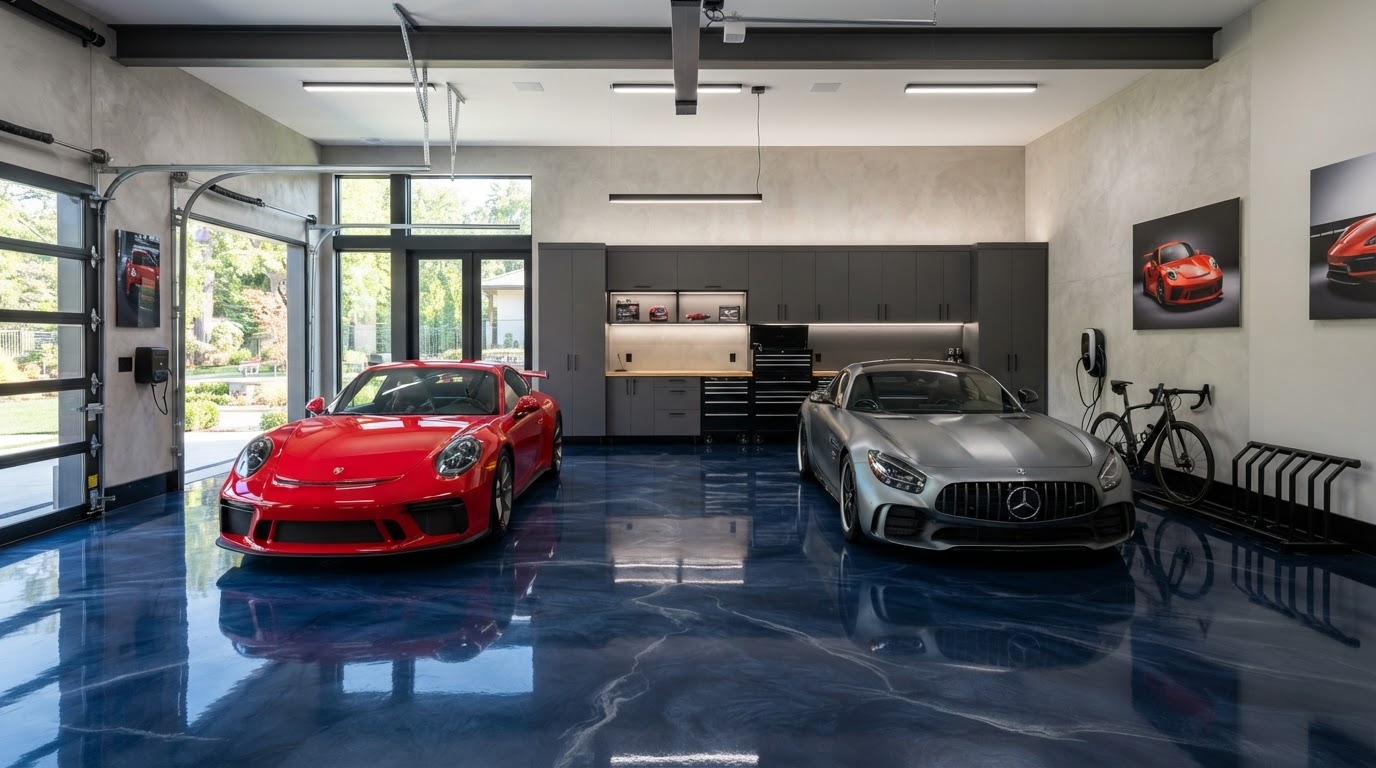
Car enthusiasts and collectors choose epoxy because the reflective finish turns the garage into a display space. A high-gloss solid color or a metallic finish under good lighting reads as a showroom, not a utility room — and the seamless surface is far easier to keep clean than bare concrete or interlocking tiles that trap debris in their seams.
In South Florida, the climate makes epoxy especially practical. Humidity and tracked sand are constant, and bare concrete dusts in that environment — coating everything stored in the garage with a fine powder. A sealed epoxy surface stops the dusting, resists the humidity, and wipes clean of the sand that gets tracked in from the driveway, the yard, or the beach.
Common questions before coating a garage floor
The most common question is how soon the floor can be used after installation. Pedestrian traffic is usually fine within 24 hours, but full cure before vehicle parking takes longer — typically three to seven days depending on the product and the conditions. Your estimator gives you the exact timing for your system so you can plan around it, including when it's safe to walk on and when you can park on it.
Another frequent question is whether the epoxy will peel from hot tires. A properly prepared and bonded system resists hot-tire pickup because the coating is bonded to the concrete, not sitting on a contaminated or smooth surface. Preparation and product selection matter more than coating thickness alone — which is why we diamond-grind and profile every slab before any coating goes down.
Homeowners also ask whether an existing coating can be coated over. The answer is: only if the existing coating is sound and well-bonded. We test adhesion first. If the old coating is peeling, soft, or incompatible, we remove it mechanically so the new system bonds to concrete, not a failing layer. Coating over a failing surface is how a new floor fails with the old one.
What to know before coating your garage
- The slab must be ground and profiled — adhesion depends on it
- Cracks and spalls are repaired before any coating goes down
- Pedestrian traffic within a day; full vehicle cure takes longer
- Existing coatings are tested for adhesion before coating over
Choosing the right finish for your garage
The finish choice adapts the system to the use. For a garage that gets daily vehicle traffic, decorative flake is the most forgiving — the multi-color texture hides scuffs, dirt, and minor slab flaws that would show plainly on a solid color. For a showroom or a car enthusiast's space, a high-gloss solid or a metallic finish delivers the statement look. We bring samples and help you match the finish to how you actually use the space.
The finish is independent of the website's interface colors — your floor color is your choice, not our brand palette. On-screen colors are approximate, which is why we guide final selection with physical samples rather than a screen. The right finish is one that looks good in your garage's lighting and holds up to the traffic it actually gets.
What to expect from the estimate
We come to your property to assess the slab, measure the space, check for moisture and existing coatings, and identify any repairs the floor needs before coating. The estimate is based on the actual condition of your floor and the finish system you choose — not a generic price per square foot that ignores what the slab requires.
Share your project city or ZIP and we'll confirm availability before scheduling. We serve South Florida from Palm Beach County to the Florida Keys, and we'll tell you honestly whether your area is within our working scope before we book the estimate.
Frequently asked questions
What exactly is garage epoxy flooring?
It's a layered coating system — primer, pigmented basecoat, finish layer, and clear topcoat — chemically bonded to a mechanically prepared concrete slab. The bond is what makes it durable: the epoxy locks into the concrete's open pore structure after diamond grinding, creating a surface that resists hot tires, oil, and daily wear.
Is epoxy flooring good for every garage?
It suits most residential garages, workshops, home gyms, and hobby spaces. The key is matching the finish to the use — flake for high-traffic forgiveness, solid for a clean modern look, metallic for a showpiece. We assess the slab and help you choose the right system for how you use the space.
How is epoxy different from garage floor paint?
Paint is a surface coating that sits on top of the concrete. Epoxy is a thermoset system that chemically bonds to a profiled slab. Paint wears and lifts under hot tires; a bonded epoxy system resists hot-tire pickup and automotive chemicals because it's part of the surface, not a layer on top of it.
Can you coat over my existing garage floor coating?
Only if the existing coating is sound and well-bonded. We test adhesion first. If it's peeling, soft, or incompatible, we remove it mechanically so the new system bonds to concrete — coating over a failing layer means the new floor fails with the old one.
How soon can I park on my new epoxy floor?
Pedestrian traffic is usually fine within 24 hours, but full cure before vehicle parking takes longer — typically three to seven days depending on the product and conditions. Your estimator gives you the exact timing for your system.
Do you serve my area in South Florida?
We serve South Florida from Palm Beach County to the Florida Keys. Share your project city or ZIP and we'll confirm availability before scheduling your estimate.
Ready to transform your garage? Request a custom estimate and we'll assess your slab in person.
More about Garage Epoxy Flooring
Garage Epoxy Options, Comparisons, and Cost Factors
Solid color, decorative flake, and metallic — how the three garage epoxy systems compare, what drives the price, and how to choose without invented numbers.
Garage Epoxy Preparation, Process, and Care
From diamond grinding to final cure — the step-by-step installation process for a garage epoxy floor, plus the care routine that keeps it looking new.
Garage Epoxy Mistakes, Misconceptions, and How to Avoid Them
The common mistakes that ruin garage epoxy floors — from skipping prep to choosing the wrong finish — and how to prevent them before you coat.