
Garage Epoxy Options, Comparisons, and Cost Factors
Solid color, decorative flake, and metallic — how the three garage epoxy systems compare, what drives the price, and how to choose without invented numbers.
Garage Epoxy Flooring
2026-10-15
Garage epoxy flooring comes in three primary finish systems — solid color, decorative flake, and metallic — and each one suits a different use, budget, and aesthetic. Understanding the trade-offs between them is the first step in choosing a floor that looks good and holds up to the traffic your garage actually gets. We install all three and can show you samples side by side so the comparison is real, not theoretical.
The price of a garage epoxy floor is driven by the same factors regardless of the finish: square footage, slab condition and required repairs, the finish system you choose, and any existing coating that has to come off first. We give you a custom estimate after assessing the slab — not a flat per-square-foot number that ignores what the floor actually needs. This guide breaks down the options and the cost factors so you know what drives the scope before we ever set foot in your garage.
The three garage epoxy finish systems compared
Solid color epoxy delivers a uniform, contemporary surface in a single color with a high-gloss or satin topcoat. It reads clean and modern and reflects the most light, which brightens a garage with poor overhead lighting. The trade-off is that a uniform surface shows every scuff, dirt track, and minor slab flaw — so it suits showrooms and lighter-use garages better than a workspace that sees daily abuse.
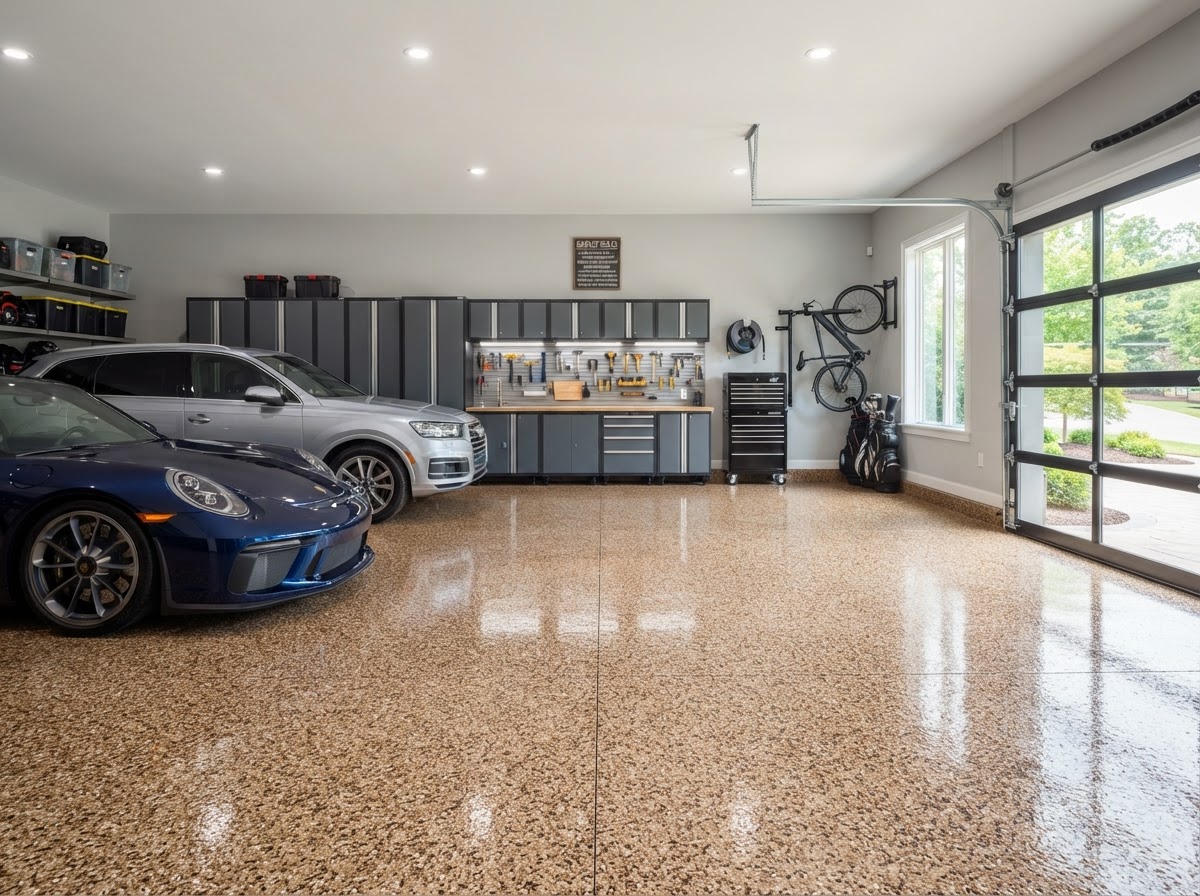
Decorative flake flooring broadcasts vinyl chips into the pigmented basecoat and seals them under a clear topcoat. The multi-color texture breaks up scuffs, dirt, and minor slab imperfections so the floor reads clean even when it isn't brand new. For a garage that gets daily vehicle traffic, flake is the most forgiving finish — it stays looking newer longer than a solid color under the same wear. The trade-off is a slightly textured surface, which most homeowners see as an advantage for grip and cleanability.
Metallic epoxy uses shimmering pigments worked by hand to create a three-dimensional, flowing finish that resembles polished stone or molten metal. Every floor is one-of-a-kind. It is the showpiece option — the dimensional depth and light-catching movement that solid and flake cannot match. The trade-off is cost: metallic requires a smoother, more refined slab and more labor to work the pigments, so it typically costs more than solid or flake.
Finish systems at a glance
- Solid color — uniform, modern, high-gloss or satin; shows scuffs
- Decorative flake — textured, forgiving, hides wear; most popular for daily use
- Metallic — dimensional, one-of-a-kind, showpiece; highest cost
- Anti-slip aggregate — addable to any topcoat for wet areas
How the finishes compare on durability and maintenance
All three systems share the same foundation: a diamond-ground, repaired slab with a bonded basecoat and a clear topcoat. The topcoat is the wear surface on all three, and all three are seamless and cleanable. The difference is in how each finish shows wear over time.
Flake hides wear best — scuffs and dirt disappear into the multi-color texture. Solid color shows wear most — every mark is visible on a uniform surface. Metallic shows wear similarly to solid but the dimensional movement helps camouflage minor scuffs better than a flat solid color. For a garage that gets real daily use, flake is the practical choice. For a garage that stays clean, solid or metallic deliver the look.
Maintenance is similar across all three: sweep or dust-mop regularly, mop with a neutral cleaner, and wipe up oil and chemicals promptly. The topcoat is the wear surface on all three — if it dulls in high-traffic areas, a recoat restores it without redoing the whole floor. The difference is how often you notice the wear, not whether it happens.
What drives the cost of a garage epoxy floor
Square footage is the starting point, but it is not the only factor. A larger floor costs more in total but less per square foot, because the setup and mobilization costs spread across more area. The finish system is the next driver — metallic costs more than flake or solid because of the slab refinement and labor it requires.
Slab condition is the variable that most often surprises homeowners. A slab with extensive cracks, spalls, or moisture issues needs more repair before coating, and that repair is part of the scope. An existing coating that has to be removed adds time and cost before the new system goes down. We assess all of this in person and include it in the estimate so there are no surprises after we start.
The topcoat selection also affects cost. A standard topcoat is included; a heavier-duty or UV-stable topcoat for a garage with sun exposure through an open door may be recommended depending on the use. We tell you what the floor needs and why, so the cost reflects the actual requirements — not an upsell.
Cost factors for a garage epoxy floor
- Square footage — the base, with economies of scale on larger floors
- Slab condition — cracks, spalls, and moisture repairs
- Finish system — solid, flake, or metallic
- Existing coating removal — if the old floor has to come off first
- Topcoat selection — standard, heavy-duty, or UV-stable
Garage epoxy versus other garage floor options
Interlocking tiles look good initially but have seams that trap dirt and can lift at the edges under traffic. A seamless epoxy system has none — there are no joints to collect debris and no edges to catch. The trade-off is that epoxy requires slab preparation, while tiles are simply snapped together over the existing surface.
Roll-out mats protect specific spots but shift under traffic and hold moisture underneath, which can damage the slab over time. They are a temporary solution, not a permanent floor. A bonded epoxy system becomes part of the surface and does not shift, lift, or trap water — but it requires the investment of proper preparation and product.
Bare concrete is the baseline: it dusts, stains, and absorbs oil. A coated floor wipes clean and stops the dusting. For a garage you use every day, the difference between a floor that lasts and one that needs replacing is the preparation and the product — and that is what the estimate reflects.
How to choose without overpaying
The right system is the one that matches your use, not the most expensive one. A garage that gets daily vehicle traffic does not need metallic — flake delivers the durability and the forgiveness at a lower cost. A showroom garage that stays clean does not need the texture of flake — a solid color delivers the clean look. We help you match the finish to the real use so you pay for what the floor needs, not for what it doesn't.
The estimate is where that matching happens. We assess the slab, measure the space, and recommend the system and the topcoat that suit the traffic and the exposure. Share your city or ZIP and we'll confirm availability and schedule the assessment — the estimate is custom because every garage floor is different.
Frequently asked questions
Which garage epoxy finish is the most durable?
All three share the same bonded basecoat and clear topcoat, so durability is similar at the system level. The difference is in how each finish shows wear: flake hides scuffs and dirt best, solid color shows them most, and metallic falls in between. For daily vehicle traffic, flake is the most forgiving choice.
Is metallic epoxy worth the extra cost for a garage?
It depends on the use. Metallic is a showpiece finish — the dimensional movement and one-of-a-kind appearance are unmatched. But it requires a smoother, more refined slab and more labor, so it costs more. If the garage is a display space or a car enthusiast's room, the investment may make sense. If it's a daily-use utility garage, flake delivers the durability at a lower cost.
What makes a garage epoxy floor cost more?
Square footage, slab condition and required repairs, the finish system (metallic costs more than flake or solid), existing coating removal, and topcoat selection. We assess all of these in person and include them in the estimate so the cost reflects the actual scope — not a generic number.
Can I get a price per square foot over the phone?
We don't give flat per-square-foot pricing because every slab is different. A floor with extensive cracks costs more to prepare than a clean slab; a floor with an existing coating costs more if it has to be removed first. The custom estimate after the assessment is the accurate number.
How does epoxy compare in cost to garage tiles or mats?
Tiles and mats cost less upfront but are temporary — tiles trap dirt in seams and lift at edges, mats shift and hold moisture. Epoxy costs more because it includes slab preparation and a bonded system, but it lasts longer and doesn't need replacing. The investment is in a permanent floor, not a temporary cover.
Do you serve my area?
We serve South Florida from Palm Beach County to the Florida Keys. Share your project city or ZIP and we'll confirm availability before scheduling your estimate.
Want to compare finishes for your garage? Request a custom estimate and we'll bring samples.
More about Garage Epoxy Flooring
What Is Garage Epoxy Flooring? Suitability and Common Questions
A plain-language guide to what garage epoxy flooring actually is, who it's for, and the questions South Florida homeowners ask before coating their garage slab.
Garage Epoxy Preparation, Process, and Care
From diamond grinding to final cure — the step-by-step installation process for a garage epoxy floor, plus the care routine that keeps it looking new.
Garage Epoxy Mistakes, Misconceptions, and How to Avoid Them
The common mistakes that ruin garage epoxy floors — from skipping prep to choosing the wrong finish — and how to prevent them before you coat.